
Academics
Learningwith purpose.
Learner-centred, future-focused education across the Academy’s current phases, with High School growing one grade at a time toward Grade 12.
Learning at Da Silva
Learner-centred. Inclusive. Future-focused.
Learning shapedaround the learner.
Da Silva Academy connects academic growth with social, emotional and ethical development. Teaching encourages critical thinking, creative problem-solving and the thoughtful use of technology.
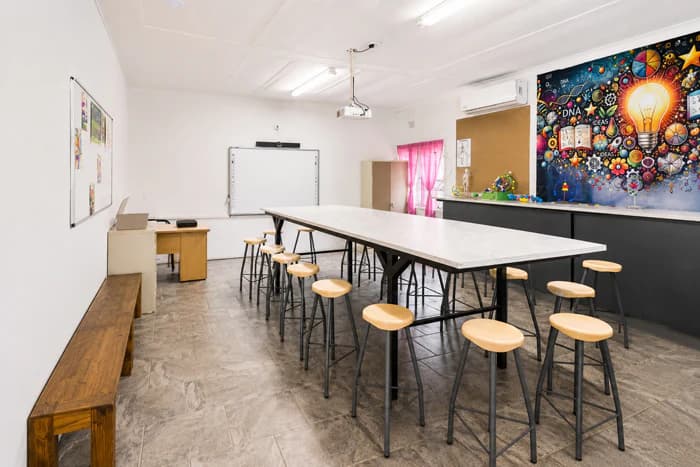
- Learner-centred & inclusive
- Teaching responds to the learner while building participation and belonging.
- Critical & creative thinking
- Learning develops thoughtful questions, problem-solving and original thinking.
- Technology with purpose
- Digital tools support teaching and learning without replacing the teacher.
- Whole-person development
- Academic, social, emotional and ethical growth remain connected.
Early Years / Foundation
A structured, nurturing beginning.
Learning throughguided discovery.
Foundation Phase teaching is structured, nurturing and developmentally appropriate. Literacy, numeracy and life skills develop through hands-on, interactive and guided learning.
Grade R
English · Mathematics · Life Skills
Grades 1–3
English · Afrikaans · Mathematics · Life Skills
Subjects and specialist allocation apply according to grade. The early-years approach is presented without assigning unverified Grade RRR curriculum detail.
Primary progression
Grades 4–7.
From concrete understandingto confident thinking.
Within Da Silva Academy's teaching progression, Grades 4–7 move toward subject-specialist learning, increased independence and more abstract concepts. This grouping describes how teaching is organised at the Academy; it is not presented as an official curriculum phase.
- Structured teaching
- Learner-centred lessons
- Interactive learning
- Participation & collaboration
- Critical thinking
- Concrete-to-abstract progression
iPad-enhanced teaching supports interactive lessons, participation and collaboration. Technology remains a teaching tool, not a substitute for purposeful instruction.
Subjects & discovery
The Primary School follows the South African Curriculum and Assessment Policy Statement (CAPS).
Knowledge builtacross the grades.
English and Afrikaans are the Academy's languages of instruction. Learning areas differ according to grade; this is not a subject set for every learner in every year.
Verified learning areas
- English
- Afrikaans
- Mathematics
- Life Skills / Life Orientation
- Social Sciences
- Natural Sciences
- Technology
- Computer Classes
- Robotics & Coding
- Creative Arts
- Economic & Management Sciences
- Physical Education
Technology & support
Grades 4–8 · CAPS-aligned
Robotics with purpose.Progress with structure.
Robotics & Coding
Across Grades 4–8, CAPS-aligned Robotics & Coding uses iPad-based learning to develop coding concepts, robotics logic and algorithmic thinking. Technology supports purposeful teaching; it does not replace it.
- Coding concepts
- Robotics logic
- Algorithmic thinking
- Problem-solving
- Creativity
- Collaboration
- Digital literacy
Academic support & progress
Baseline assessment, learner targets and regular progress tracking help identify where support is needed. Subject improvement planning and result analysis guide focused academic intervention.
- Baseline assessments
- Learner targets
- Targeted intervention
- Progress tracking
- Subject improvement planning
- Result analysis
Where monitoring identifies a need, learners can enter a formal, structured support process with targeted intervention and follow-up.
Assessment
Assessment follows CAPS–ATP requirements across the current phases, supported by progress monitoring, feedback and academic intervention where needed.
High School
A deliberate expansion.
Growing one gradeat a time.
Da Silva Academy is expanding its High School through a deliberate annual rollout. Grade 8 is operating in 2026; Grade 9 opens in 2027, followed by Grade 10 in 2028, Grade 11 in 2029 and Grade 12 in 2030.
- 2026Grade 8Operating
- 2027Grade 9Opens
- 2028Grade 10Follows
- 2029Grade 11Follows
- 2030Grade 12Completes the pathway
Grade 8 · Operating in 2026
Purposeful teaching.Rigorous learning.
Grade 8 is CAPS–ATP aligned, with subject-specific planning, structured teaching and interactive, iPad-enhanced lessons. Learning prepares learners for assessments and examinations, further education and future pathways.
Grade 8 subjects
- English
- Afrikaans
- Mathematics
- Life Orientation
- Social Sciences
- Natural Sciences
- Technology
- Creative Arts
- Economic & Management Sciences
- Physical Education
Continue through Da Silva